
Middletown Previous Residents Sources
The backward trail changes by era. Parcel and deed records are strongest for a property connection, while a directory, census, church register, obituary, or tax-ratable can supply household or community context. The dates below are documented local or Monmouth coverage points. They do not mean every address, year, or name is available online.
| Sources | Years it covers | Where held | What it shows |
|---|---|---|---|
| Assessment and deed references | Current record dates vary | Middletown Tax Assessment, Monmouth OPRS, and County Clerk | Parcel identifiers, assessed owner, sale or deed references |
| County directory runs | 1875; 1885-86 through 1920-21 | NJ Historical Society, State Library catalog, MCHA, and local libraries | Household, business, village, post office, and occupation clues |
| Monmouth 1875 census | 1875 | County OPRS archives | Person, town or category, and locality clue |
| Monmouth obituary indexes | 1830-1988 by newspaper | Monmouth County Historical Association | Residence, relatives, church, cemetery, and migration leads |
| Middletown tax ratables | 1778-1795 | New Jersey State Archives, books 1139-1155 | Taxpayer and property or taxable-property context |
| Zoning-map sequence | 1970/1977 through 2025 | Middletown Development Services | Street, subdivision, parcel, and neighborhood changes |
Use the newest parcel record to identify the land, then choose the historical source that matches the period. A date on a deed is evidence of a recorded transfer. A date in a directory or census is evidence of a dated listing or count, which is a different claim.
Middletown Parcels Before Names
Monmouth County's OPRS Consolidated Records Search is the practical address-first starting point. Select Middletown Township, search a distinctive street fragment, and compare results rather than accepting the first similar street. Save the block, lot, qualifier, situs address, assessment year, assessed owner, deed or sale reference, and map location. The situs is the parcel's physical location. A mailing address can differ and should never be folded into an occupancy claim.
For an exact parcel, move to block and lot, adding the qualifier when one appears. The Tax Board search also permits address, owner, block/lot, and selected-year routes. OPRS does not state one universal online start year for deeds, so the result itself must be dated and the chain must stop when the available record stops.
Monmouth County's property-fraud alert announcement describes the recording-alert service.
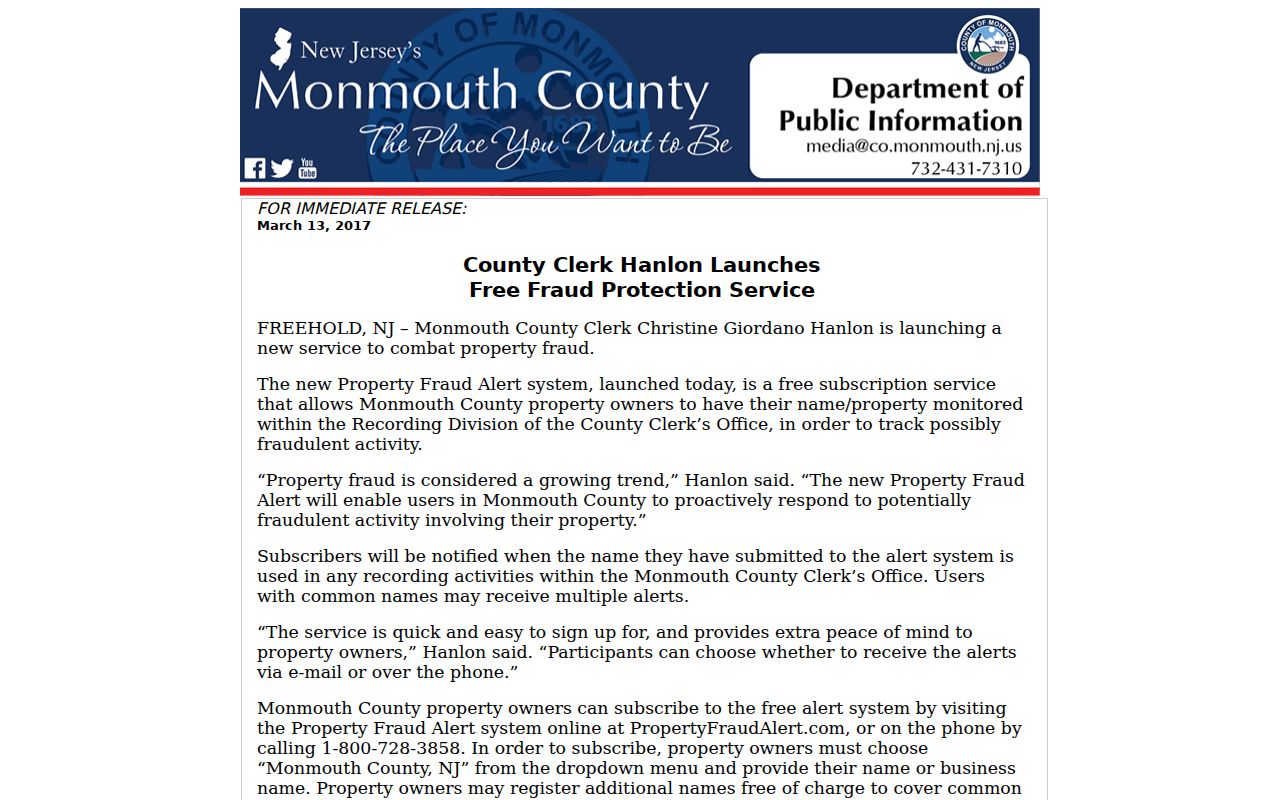
The free alert can notify a property owner by email, phone, or text when a similar name appears in a recording. It is a prompt to inspect an instrument, not proof that fraud occurred, especially where names are common.
Middletown Deed Chain Backward
Start a deed chain with the parcel's current identifiers, not a remembered address alone. In the County Clerk index, locate the target transfer, record the named grantee, grantor, document type, recording date, instrument or book/page reference, consideration when indexed, and legal description. Then find the acquisition record for the person or entity that sold the property. The legal description and block/lot are more durable than a street number when a tract was split or a road name changed.
- Find the current parcel through OPRS or the tax assessment records and capture block, lot, qualifier, situs, and assessment year.
- Open the matching County Clerk deed record and log the grantee, grantor, date, document reference, and land description.
- Search that seller as a prior grantee to locate the earlier acquisition, then compare the legal description before calling it the same property.
- Repeat one recorded transfer at a time. Mark an estate, trust, corporation, subdivision, missing image, or changed tract as a possible break.
- For an older tract, move to County Clerk access, library and archive help, tax maps, or certified-copy procedures rather than inventing a missing link.
- Grantor
- The party conveying an interest in a recorded deed. It can be an individual, estate, trust, or other entity.
- Grantee
- The party receiving the recorded interest. A grantee is not automatically a resident of the parcel.
- Chain of title
- The documented sequence of recorded transfers that connect one property interest to an earlier one.
- Legal description
- The parcel language in a record, such as a lot, tract, or metes-and-bounds description, used to test whether two records concern the same land.
Middletown Previous Residents and Maps
A land trail can branch when a parent tract becomes new lots. Compare the current OPRS parcel map with tax maps, subdivision references, deeds, and the township's zoning-map editions. Middletown lists maps for 1970/1977, 1992, 1994, 1995, 1999, 2001, 2004, 2005, 2007, 2010, 2011, 2017, and 2025. Those editions can explain a subdivision label, altered road pattern, or a block-and-lot change, but they do not identify occupants.
For a historical street search, work forward as well as backward when necessary. An older deed may describe a farm or parent tract, while a later map shows the smaller parcel. Use an original land description to connect the sequence. A map boundary can be a road, water edge, common element, or artifact, so verify it in the deed or tax-map record.
Note: Label an owner by the deed or assessment date, and label a resident only when a dated source actually supports occupancy.
Middletown Village Address Changes
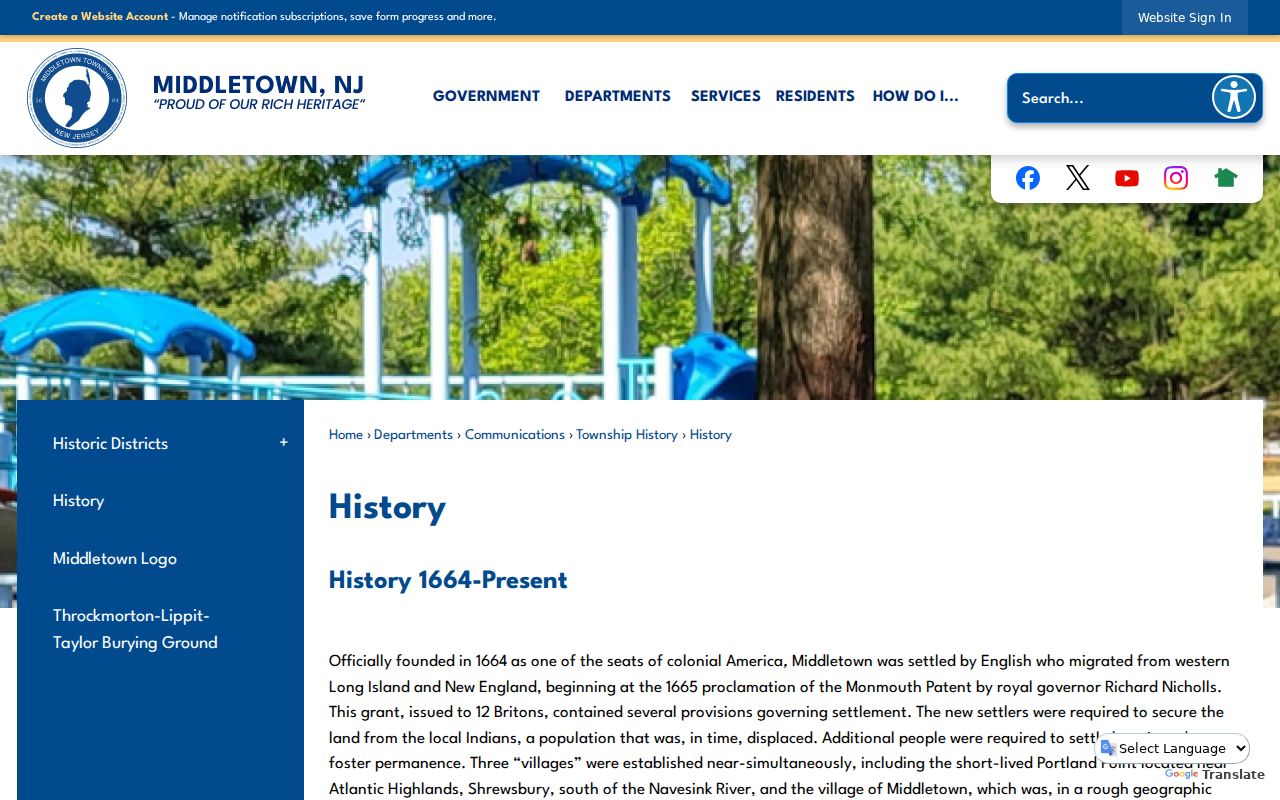
Address archaeology begins with the name used at the time. Middletown Village developed as an English grid of 36 lots along Kings Highway, with outlots beyond the compact village. Navesink was once Riceville, and the Dutch settlement around Laurel Avenue was known as Holland. Harmony and Chapel Hill are other historic terms worth testing. A nineteenth-century record may give a village, farm, route, or post office instead of a present-day house number.
Middletown Township's history page is the source for the changing-boundary and village context shown here.
Search the historic term alongside Middletown Township in directory, census, church, newspaper, map, and family collections. Keep the old label in the research note rather than silently replacing it with a current postal name. That preserves the source's geography and makes a later check possible.
Middletown Directory Census Pairing
Owners are only part of a house history. Directory and census evidence can identify household members or local ties at a particular date, while the deed chain identifies recorded property parties. The directory collections are described in detail on the Middletown city directories page. For an address-first question, use a period-appropriate street or criss-cross section where available, copy the printed occupant name and adjacent addresses, then confirm that name in the alphabetical section.
- Choose the nearest documented county directory run and preserve its village, route, or post-office wording.
- Find the name in the alphabetical listing, then compare nearby editions for moves, household notation, and work or business changes.
- Search the Monmouth 1875 census by Town Name, Category Name, and Person Name, trying Starts With and Contains.
- Compare the result with a deed, tax ratable, church record, obituary, or map before placing the household at a specific property.
MCHA's Research Library and Archives describes its appointment research option.
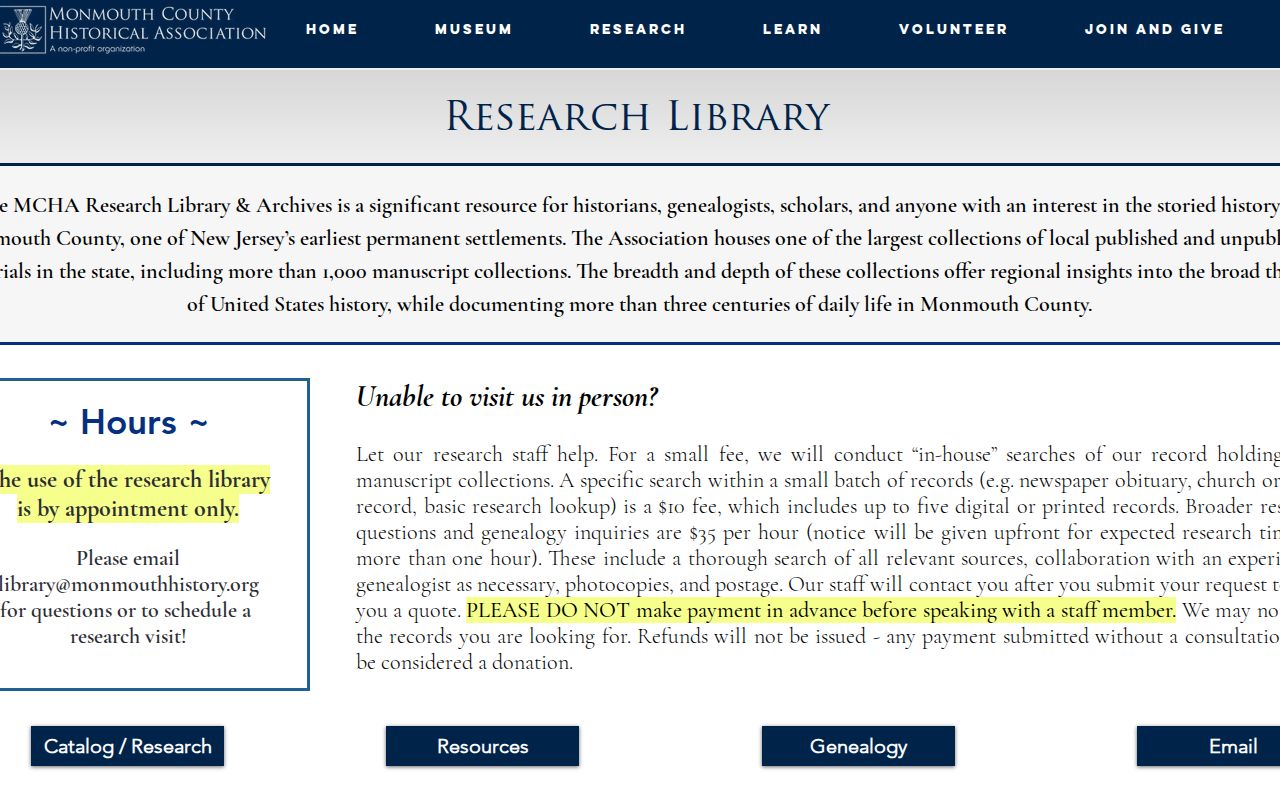
The Freehold library has more than 1,000 manuscript collections. Staff offer a limited specific search for $10, with up to five digital or printed records, and broader genealogy help at $35 per hour after a quote. State the name, date range, village or street, and likely collection before arranging a visit.
Middletown Tax-Ratable Trail
For periods before printed directory runs, State Archives catalog books 1139-1155 contain Middletown Township tax ratables for 1778-1795. A tax ratable can provide a taxpayer or property clue. It is not a deed, household list, or continuous ownership record. The State Archives also describes county deeds, mortgages, surrogate records, tax material, court and naturalization records, military collections, state censuses, and vital indexes that can add a different dated layer.
The New Jersey State Archives genealogy collections provide a deep-time research route.
The Archives does not conduct mail searches of tax lists. Identify a cataloged book and year first, then use its research-room route and compare any taxpayer clue to land records, church material, and later county directories or census records.
Middletown Previous Residents Research Breaks
Stop the backward trail at a documented break and name it. Common breaks include an unavailable image, a changed parcel, an estate, a trust, a corporate party, an incomplete series, a boundary change, or a source that was never digitized. A no-result can also mean the person was indexed under a spouse, parent, village, post office, or spelling variant. A precise stop point is more useful than a guessed continuation.
Monmouth County's Surrogate Index of Estates is one possible estate lead for records from 1991 forward. It is free after its agreement gate, may be delayed by 24 hours or more, and is not a complete public-record search.
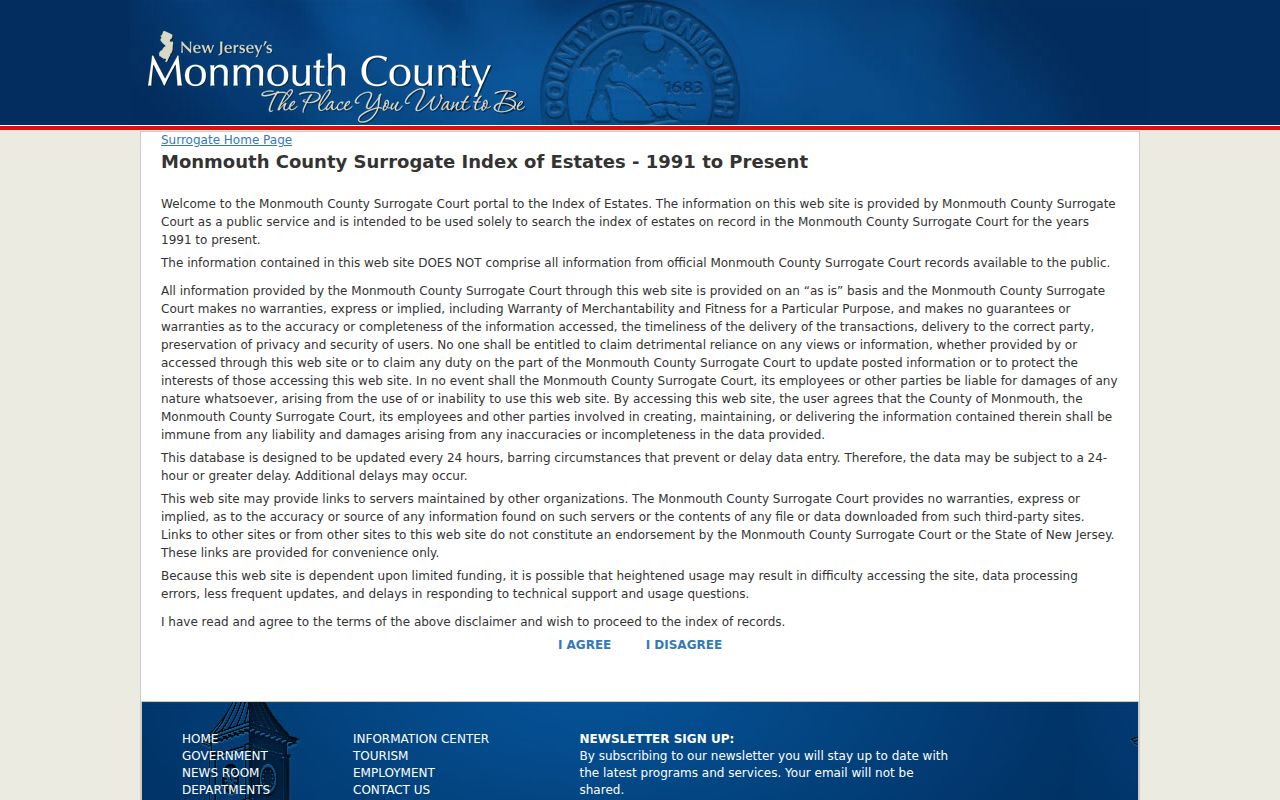
An estate entry can direct a researcher to a case or date, but it does not prove ownership, residence, heirs, or a property link by itself. Compare it against the deed chain and the actual court or recorded document where access permits.
Middletown Previous Residents Lawful Use
House history, family history, estate questions, and personal curiosity are legitimate reasons to organize dated public sources. Respect access limits and redactions. A property record may show a mailing address that differs from the situs, and protected address programs can limit disclosure. Do not reproduce an unredacted signature, personal identifier, or protected mailing detail simply because it appears in a source image.
When a record is not online, the documented alternatives are Middletown Tax Assessment by phone or counter, the County Clerk Hall of Records, county maps and GIS, an OPRA request to the appropriate custodian, municipal permit offices, certified-copy or mail procedures, library reference help, MCHA, the State Archives, and in-person public terminals. Each route can answer a narrower question than a general people search.